

Report
News and reports
Martha’s Rule
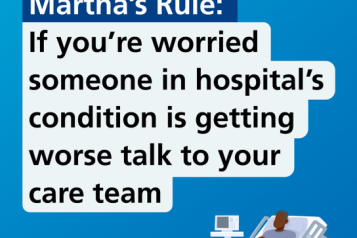
Martha’s Rule is a patient safety initiative to support the early detection of deterioration by ensuring the concerns of patients, families, carers and staff are listened to and acted upon.
It has been developed in response to the death of Martha Mills and other cases related to the management of deterioration. Central to Martha’s Rule is the right for patients, families and carers to request a rapid review if they are worried that a patient’s condition is getting worse and their concerns are not being responded to.
NHS trusts are working hard to put Martha’s Rule in place in all acute inpatient settings. While it is not available everywhere yet, implementation in these settings is expected to be complete during 2026/27. More details are available in the Implementing Martha’s Rule section below.
If you or a person you care for are admitted to hospital, you can check whether Martha’s Rule is available by:
visiting the trust’s website
asking staff on the ward
What is Martha’s Rule?
Martha’s Rule recognises that those who know the patient best may be the first to notice changes that could be an early sign of deterioration, and the importance of listening to and acting on the concerns of patients, families and carers. It is being implemented in both adult and children’s inpatient settings in England.
It has been developed in response to the death of Martha Mills and other cases related to the management of deterioration. Central to Martha’s Rule is the right for patients, families and carers to request a rapid review if they are worried that a patient’s condition is getting worse and their concerns are not being responded to.
NHS trusts are working hard to put Martha’s Rule in place in all acute inpatient settings. While it is not available everywhere yet, implementation in these settings is expected to be complete during 2026/27. More details are available in the Implementing Martha’s Rule section below.
If you or a person you care for are admitted to hospital, you can check whether Martha’s Rule is available by:
visiting the trust’s website
asking staff on the ward
What is Martha’s Rule?
Martha’s Rule recognises that those who know the patient best may be the first to notice changes that could be an early sign of deterioration, and the importance of listening to and acting on the concerns of patients, families and carers. It is being implemented in both adult and children’s inpatient settings in England.
Advice and Information

Our Spring 2026 Newsletter has Sprung!
Yes, it's full of information, advice, and support. There are things you can get involved in to.
News
Our February 2026 E-Bulletin is now available
A brief outline of some of the issues and themes patients have faced when accessing Walsall Services during January 2026.
Report
Community vaccination pilot increases maternal vaccine uptake and improves equity of access in Dudley
A pioneering community vaccination pilot in Dudley has significantly increased uptake of maternal vaccinations and improved equitable access for pregnant women who may otherwise miss opportunities to be vaccinated.
Launched in response to the national rollout of the RSV vaccination programme in September 2024, the Dudley Community Vaccination Pilot was co-produced by the Black Country Integrated Care Board (ICB) Vaccinations and Immunisations Team and The Dudley Group NHS Foundation Trust (DGFT).
Prior to the pilot, RSV vaccination uptake locally stood at 34 per cent, below the national ambition of 50 per cent. It was identified that women on a Midwife Led Care (MLC) pathway who are typically seen in community settings rather than hospital antenatal clinics, were less likely to encounter vaccination teams and therefore faced inequitable access.
To address this, midwife vaccinators proactively contacted eligible women, offering personalised telephone consultations to support informed choice. Where consented, appointments were made at local community family hubs in Brierley Hill and Lye.
Between February and December 2025, 434 were vaccinated across 78 clinics resulting in an overall RSV vaccination uptake increase from 34 per cent pre-pilot to 46 per cent.
Across RSV, pertussis and seasonal flu vaccinations, the community offer contributed to a combined 19 per cent increase in uptake.
The hubs were deliberately located in areas of higher deprivation, following feedback from women highlighting the importance of accessible venues, free parking, public transport links and trusted midwife led conversations.
Women described the service as “easy to get to”, “friendly and welcoming”, and said they were “much less likely to get the vaccine if the only place on offer was hospital”.
Liz Punter, Public Health Project Midwife at DGFT, said: “By reducing barriers to access and enabling more in-depth vaccination discussions outside routine antenatal appointments, the pilot has helped narrow variation in access between hospital-based and community-based maternity pathways.
“Increased maternal vaccination protects newborn babies from severe respiratory illness, reduces avoidable hospital admissions and supports our sickness to prevention shift which is one of the three core pillars of the NHS 10-Year Health Plan.”
Following the demonstrable improvement in uptake and positive patient feedback, the pilot has been extended to March 2026. Findings have been shared across the Local Maternity and Neonatal System (LMNS) and wider ICB networks, with other Trusts exploring replication of the model.
This collaborative approach demonstrates how system-wide partnership working, community-based delivery and proactive engagement can improve health outcomes, reduce inequalities and strengthen prevention for mothers and babies.
Launched in response to the national rollout of the RSV vaccination programme in September 2024, the Dudley Community Vaccination Pilot was co-produced by the Black Country Integrated Care Board (ICB) Vaccinations and Immunisations Team and The Dudley Group NHS Foundation Trust (DGFT).
Prior to the pilot, RSV vaccination uptake locally stood at 34 per cent, below the national ambition of 50 per cent. It was identified that women on a Midwife Led Care (MLC) pathway who are typically seen in community settings rather than hospital antenatal clinics, were less likely to encounter vaccination teams and therefore faced inequitable access.
To address this, midwife vaccinators proactively contacted eligible women, offering personalised telephone consultations to support informed choice. Where consented, appointments were made at local community family hubs in Brierley Hill and Lye.
Between February and December 2025, 434 were vaccinated across 78 clinics resulting in an overall RSV vaccination uptake increase from 34 per cent pre-pilot to 46 per cent.
Across RSV, pertussis and seasonal flu vaccinations, the community offer contributed to a combined 19 per cent increase in uptake.
The hubs were deliberately located in areas of higher deprivation, following feedback from women highlighting the importance of accessible venues, free parking, public transport links and trusted midwife led conversations.
Women described the service as “easy to get to”, “friendly and welcoming”, and said they were “much less likely to get the vaccine if the only place on offer was hospital”.
Liz Punter, Public Health Project Midwife at DGFT, said: “By reducing barriers to access and enabling more in-depth vaccination discussions outside routine antenatal appointments, the pilot has helped narrow variation in access between hospital-based and community-based maternity pathways.
“Increased maternal vaccination protects newborn babies from severe respiratory illness, reduces avoidable hospital admissions and supports our sickness to prevention shift which is one of the three core pillars of the NHS 10-Year Health Plan.”
Following the demonstrable improvement in uptake and positive patient feedback, the pilot has been extended to March 2026. Findings have been shared across the Local Maternity and Neonatal System (LMNS) and wider ICB networks, with other Trusts exploring replication of the model.
This collaborative approach demonstrates how system-wide partnership working, community-based delivery and proactive engagement can improve health outcomes, reduce inequalities and strengthen prevention for mothers and babies.
News
Our January 2026 E-Bulletin is now available
A brief outline of some of the issues and themes patients have faced when accessing Walsall Services during January 2026.
Report
Our latest Enter and View Report for Dr. Mahbub GP services is now available
To read or download a copy.
Report

Our latest Enter and View Report for Inglewood Care Home is now available
To read or download a copy.
Report
Protect yourself from slips and falls
With weather warnings and the forecast of frosty temperatures extended until Sunday 11 January, the NHS is reminding people to take care in the cold weather.
Slips, trips and falls all become more likely during wet, cold and icy weather conditions, so it’s important to be mindful of the weather before venturing outside.
There are many steps that can be taken to reduce the chances of falling, including keeping hands free to help stabilise yourself, wearing shoes with good grip and avoiding going out early in the morning when frost is thick or late at night when it’s dark.
Dr Mona Sidhu, a GP in Wolverhampton and Primary Care Medical Director for NHS Black Country Integrated Care Board, said: “Falls can happen to anyone, especially when the weather is colder, wetter and there’s ice on the ground. However, older people are even more vulnerable to such accidents.
“If they were to fall there is likely to be a bigger impact on their overall health, whether that be physically through injury or mentally and emotionally through loss of confidence and an increase in anxiety.
“As the temperature continues to drop, streets can be extremely slippery underfoot due to fallen leaves and icy pavements, so we would encourage all older people to take extra care when out and about.
“If you do need to go outside, wear shoes or boots with a flat, low heel and a slip-resistant sole to reduce slipping hazards and a good tread that helps to grip the surface. It’s important to keep warm and wear layers, both inside and outside, as when you’re cold you naturally tense up so you don’t move as well as you would normally.
“It’s also important to keep your hands free and wear gloves when walking so you can help stabilise or save yourself from a more significant injury if you were to fall. The more we rush, the more likely we are to fall, so plan ahead to give yourself plenty of time to complete an activity or get to an appointment.
“If you can, always try to let someone know what your plans are and what time you anticipate being home and be sure to have access to a mobile phone where possible so you can call for help if necessary.”
People are also being encouraged to check up on friends, relatives and neighbours who may be
more at risk of a fall.
Dr Natasha Behl, a GP in Solihull, added: “Cold snaps can be particularly challenging for older people and those with long-term health conditions, especially if icy conditions make it harder to get out and about.
“Checking in on loved ones during this time is incredibly important. A quick phone call, a knock on the door, or offering to pick up shopping or prescriptions can help prevent accidents and ensure people are staying warm, well and supported.
“Making sure someone has enough food, heating and medication may seem like a small action, but it can make a huge difference to their health and wellbeing during periods of severe cold.”
Slips, trips and falls all become more likely during wet, cold and icy weather conditions, so it’s important to be mindful of the weather before venturing outside.
There are many steps that can be taken to reduce the chances of falling, including keeping hands free to help stabilise yourself, wearing shoes with good grip and avoiding going out early in the morning when frost is thick or late at night when it’s dark.
Dr Mona Sidhu, a GP in Wolverhampton and Primary Care Medical Director for NHS Black Country Integrated Care Board, said: “Falls can happen to anyone, especially when the weather is colder, wetter and there’s ice on the ground. However, older people are even more vulnerable to such accidents.
“If they were to fall there is likely to be a bigger impact on their overall health, whether that be physically through injury or mentally and emotionally through loss of confidence and an increase in anxiety.
“As the temperature continues to drop, streets can be extremely slippery underfoot due to fallen leaves and icy pavements, so we would encourage all older people to take extra care when out and about.
“If you do need to go outside, wear shoes or boots with a flat, low heel and a slip-resistant sole to reduce slipping hazards and a good tread that helps to grip the surface. It’s important to keep warm and wear layers, both inside and outside, as when you’re cold you naturally tense up so you don’t move as well as you would normally.
“It’s also important to keep your hands free and wear gloves when walking so you can help stabilise or save yourself from a more significant injury if you were to fall. The more we rush, the more likely we are to fall, so plan ahead to give yourself plenty of time to complete an activity or get to an appointment.
“If you can, always try to let someone know what your plans are and what time you anticipate being home and be sure to have access to a mobile phone where possible so you can call for help if necessary.”
People are also being encouraged to check up on friends, relatives and neighbours who may be
more at risk of a fall.
Dr Natasha Behl, a GP in Solihull, added: “Cold snaps can be particularly challenging for older people and those with long-term health conditions, especially if icy conditions make it harder to get out and about.
“Checking in on loved ones during this time is incredibly important. A quick phone call, a knock on the door, or offering to pick up shopping or prescriptions can help prevent accidents and ensure people are staying warm, well and supported.
“Making sure someone has enough food, heating and medication may seem like a small action, but it can make a huge difference to their health and wellbeing during periods of severe cold.”
Advice and Information
Mobile vaccination vans expand vaccine offer from 1 January across the Black Country
From 1 January, mobile vaccination clinics across the Black Country will be offering a wider range of vaccines to help protect residents of all ages against serious and preventable illnesses.
The expanded service means people will now be able to access the following vaccines at local mobile clinics:
• Flu
• MMRV (measles, mumps, rubella and chickenpox)
• RSV vaccine for older adults
• RSV vaccine for pregnant women
• Pertussis (whooping cough) vaccine for pregnant women
• COVID-19 vaccine (for eligible adults and children).
Those who are eligible and yet to have their vaccines are encouraged to come forward, particularly older adults, pregnant women and parents and carers, to ensure they and their children are protected.
Vaccination is one of the most effective ways to prevent serious illness, reduce hospital
admissions and protect vulnerable members of the community, including babies who are too young to be vaccinated themselves.
Sally Roberts, Chief Quality Officer and Chief Nursing Officer for NHS Black Country Integrated
Care Board (ICB), said: “By expanding the range of vaccines available at our mobile clinics, we’re making it easier than ever for people to get protected close to home. Whether you’re pregnant, caring for a young child, or looking after your own health as you get older, these vaccines can make a real difference.”
RSV (Respiratory Syncytial Virus) can be especially serious for older adults and newborn babies.
Vaccinating pregnant women helps protect babies from birth, while vaccinating older adults
reduces the risk of severe illness and hospitalisation.
Similarly, the pertussis (whooping cough) vaccine during pregnancy provides vital early protection for newborns, and MMR vaccination protects children and communities against outbreaks of measles, mumps and rubella.
Mobile clinics are convenient and accessible, no appointment needed, just walk-in!
The expanded service means people will now be able to access the following vaccines at local mobile clinics:
• Flu
• MMRV (measles, mumps, rubella and chickenpox)
• RSV vaccine for older adults
• RSV vaccine for pregnant women
• Pertussis (whooping cough) vaccine for pregnant women
• COVID-19 vaccine (for eligible adults and children).
Those who are eligible and yet to have their vaccines are encouraged to come forward, particularly older adults, pregnant women and parents and carers, to ensure they and their children are protected.
Vaccination is one of the most effective ways to prevent serious illness, reduce hospital
admissions and protect vulnerable members of the community, including babies who are too young to be vaccinated themselves.
Sally Roberts, Chief Quality Officer and Chief Nursing Officer for NHS Black Country Integrated
Care Board (ICB), said: “By expanding the range of vaccines available at our mobile clinics, we’re making it easier than ever for people to get protected close to home. Whether you’re pregnant, caring for a young child, or looking after your own health as you get older, these vaccines can make a real difference.”
RSV (Respiratory Syncytial Virus) can be especially serious for older adults and newborn babies.
Vaccinating pregnant women helps protect babies from birth, while vaccinating older adults
reduces the risk of severe illness and hospitalisation.
Similarly, the pertussis (whooping cough) vaccine during pregnancy provides vital early protection for newborns, and MMR vaccination protects children and communities against outbreaks of measles, mumps and rubella.
Mobile clinics are convenient and accessible, no appointment needed, just walk-in!
News
2026 is here!
Dear Walsall residents. We look forward to working with you and for you in 2026. In the meantime, if you have used a Walsall health or social care service during the holiday period, please share your experience on our 24.7 review platform 'Have Your Say'.
News
To you...
Thank you for the time you have spent sharing your Walsall health and social care service(s) experience(s)
over the last year.
We will be closed on New Year's Day, 1st January 2026.
If you need urgent medical help call: 999 or NHS111.
over the last year.
We will be closed on New Year's Day, 1st January 2026.
If you need urgent medical help call: 999 or NHS111.
News